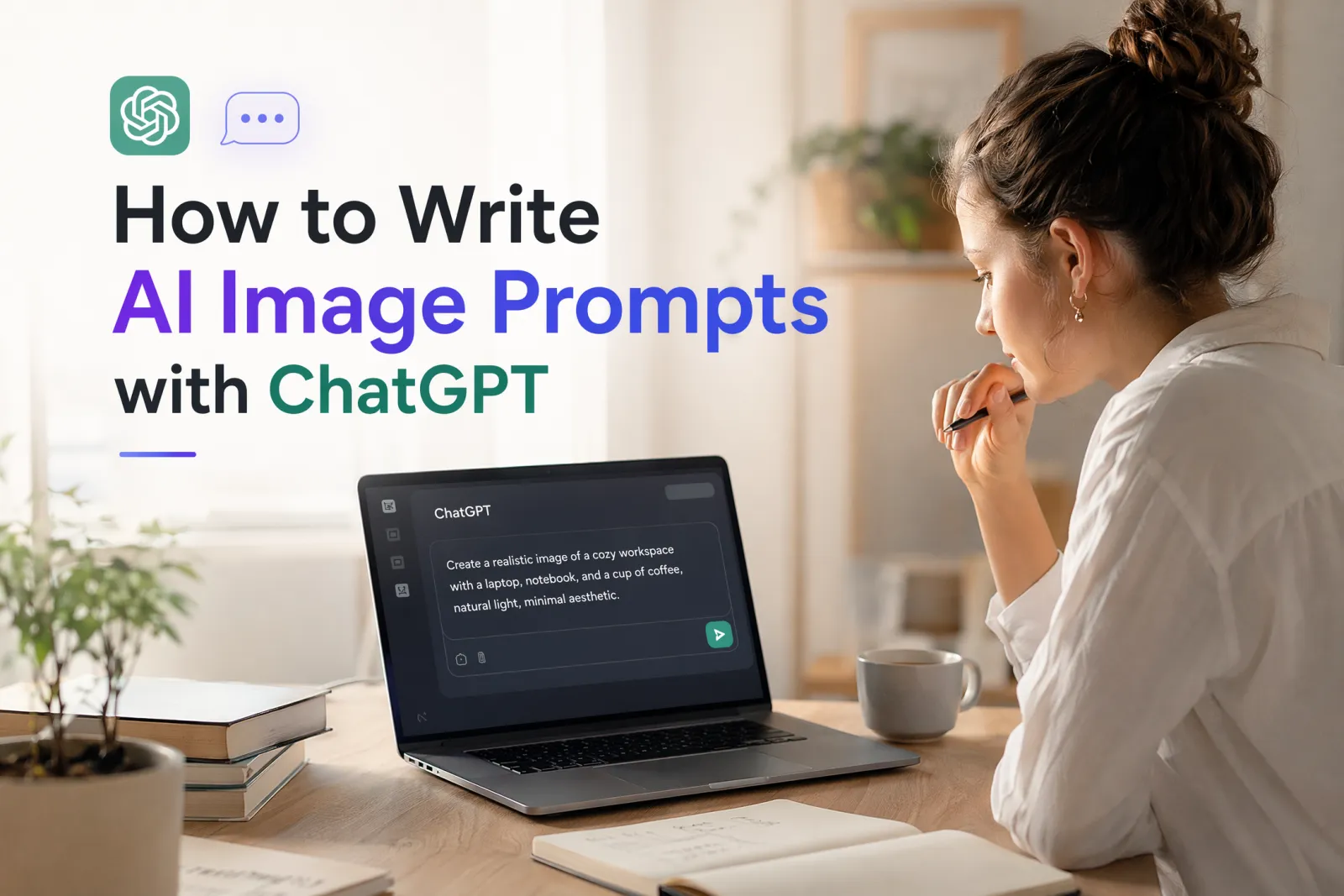
Writing the perfect AI image prompt can feel like guesswork — until you see the difference side by side. This guide breaks down 10 prompt styles with exact examples you can copy, so you know exactly what changes the result.
1. Simple vs. Detailed Description
The most common mistake is being too vague. Specificity transforms a generic result into something actually usable.


| Before Prompt: A dog on a beach | After Prompt: A golden retriever sitting on a sunny beach at golden hour, waves in the background, shallow depth of field, photorealistic |
2. Photorealistic vs. Illustration Style
A single style keyword shifts the entire aesthetic. Decide which direction fits your goal before writing anything else.


| Photorealistic Prompt: A futuristic city, photorealistic, ultra-detailed, 8k | Illustration Prompt: A futuristic city, flat illustration, pastel colors, vector art style |
3. No Lighting Direction vs. Cinematic Lighting
Lighting is the most underused prompt lever. A single lighting keyword changes the mood entirely.


| No lighting Prompt: Portrait of a woman, professional photo | With lighting Prompt: Portrait of a woman, dramatic side lighting, film noir, 35mm lens, professional photography |
4. No Mood vs. Defined Atmosphere
Emotional keywords tell the model what to prioritize in texture, color, and composition. They do more work than you expect.


| No mood Prompt: A forest path | With atmosphere Prompt: A misty forest path at dawn, ethereal, soft light filtering through trees, peaceful and mysterious atmosphere |
5. Literal Description vs. Style Reference
Referencing a visual style — a director, an era, a design movement — beats describing every detail one by one.


| Literal Prompt: A coffee shop interior | Style reference Prompt: A cozy coffee shop interior, Wes Anderson aesthetic, symmetrical composition, warm pastel tones, film photography |
6. No Color Palette vs. Locked Color Palette
Without color direction, the model guesses. Specifying a palette gives you consistent, intentional output every time.


| No palette Prompt: A product shot of a perfume bottle | With palette Prompt: A perfume bottle product shot, monochromatic purple palette, studio lighting, minimalist background, luxury editorial style |
7. Generic Background vs. Specific Environment
Background context shapes the entire logic of a scene — the lighting, the shadows, the mood, and what feels believable.


| Generic Prompt: A robot character | Specific environment Prompt: A friendly robot character standing in a cluttered Tokyo alleyway at night, neon reflections on wet pavement, cyberpunk style |
8. No Camera Angle vs. Defined Perspective
Camera direction is a free variable that most people skip. Defining it gives you immediate control over drama and scale.


| No angle Prompt: A skyscraper | Defined angle Prompt: Looking up at a glass skyscraper from street level, dramatic worm’s-eye view, dramatic sky, architectural photography |
9. Default Daytime vs. Time of Day Override
Time of day sets lighting, color palette, and mood in a single instruction. It is one of the highest-leverage additions you can make.


| Default (daytime) Prompt: A mountain landscape | With time override Prompt: A mountain landscape at blue hour, just after sunset, deep indigo sky, snow-capped peaks glowing with last light, long exposure photography |
10. No Exclusions vs. Explicit Negative Instructions
Telling the model what not to include is just as powerful as telling it what you want. Use exclusions to clean up stubborn clutter.


| No exclusions Prompt: A clean workspace flat lay, top-down view | With exclusions Prompt: A clean workspace flat lay, top-down view, no people, no clutter, no shadows, minimalist, only keyboard and notebook |
Mastering AI image prompts is about giving the model fewer choices, not more freedom. Start with style plus lighting plus color, and build from there. If you want to run multiple AI image models and compare results instantly, iMini AI lets you generate across different models in one canvas — no tab-switching needed.