
How to Use Codex Skill to 10x Your Content Output and Earn Money
June 17, 2026
June 17, 2026
If you've been grinding out content manually while watching others grow their audiences ten times faster, there's a good chance they've discovered something you haven't: Codex Skill. The combination of OpenAI's Codex and its growing ecosystem of community Skills is quietly becoming the most powerful traffic and income lever available to content creators in 2026.
What Is Codex Skill and Why Every Creator Needs It
Codex is OpenAI's AI coding agent that can autonomously execute complex, multi-step tasks inside a sandboxed cloud environment. Unlike a simple chatbot, Codex reads your goal, plans the steps, writes code, runs it, checks the output, and iterates — all without you lifting a finger.
Skills are pre-built instruction sets layered on top of Codex. Think of them as apps for your AI agent. A Goal Skill converts a single vague sentence — "write a viral article about AI tools" — into a structured, research-backed content plan. An SEO Skill automatically audits your draft, injects keywords at natural density, and rewrites meta descriptions to click-bait without feeling spammy.
For creators, this means the barrier between idea and publishable content collapses from hours to minutes.
5 Codex Skills That Immediately Boost Your Output
1. Goal Skill — One Sentence to a Full Content Plan
The most popular open-source Skill right now (see qiaomu-goal-meta-skill on GitHub) takes a one-line requirement and auto-generates a Codex Goal instruction. That Goal then drives Codex to research, outline, draft, and format a complete article — in under 10 minutes.
Creators who use this report publishing 3–5 articles per day instead of one. That's 15–25x more surface area for search traffic to land on.
2. SEO Skill — Rank Without Overthinking
You describe your target keyword. The Skill analyzes the top-10 SERP, reverse-engineers the word count, heading structure, and semantic entities, then rewrites your draft to match — while keeping your voice intact.
3. Social Media Repurpose Skill
One blog post becomes 10 Twitter threads, 5 LinkedIn posts, 3 Instagram captions, and a YouTube description. Codex handles the tone shifts between platforms automatically.
4. Trend Research Skill
Before you write anything, this Skill scans Google Trends, Reddit, and X to surface topics that are rising but not yet saturated. It's the difference between writing about yesterday's news and becoming the first authoritative source on tomorrow's story.
5. Thumbnail Prompt Skill
Codex generates highly specific image prompts (complete with style, composition, and copy guidance) that you can feed directly into tools like iMini AI to create professional-grade cover images that stop the scroll.
10 Ready-to-Use Codex Skill Prompts (Copy & Paste)
The fastest way to get started with Codex Skill is to copy a proven prompt and run it immediately. Each of the following prompts is a complete, self-contained Skill instruction you can paste directly into Codex. Replace the bracketed placeholders with your own topic or content.
Prompt 1 — Goal Skill: One Sentence to Full Content Plan
Use this to turn a vague idea into a structured, publishable article plan in minutes.
You are a content strategy expert. Given the topic below, generate a complete article plan:

Topic: [YOUR TOPIC HERE]

Deliver:
1. SEO title (50–60 characters, keyword-first)
2. Target keyword + 3 LSI keywords
3. Article structure: intro, 4–6 H2 sections with H3 sub-points, conclusion + CTA
4. Estimated word count based on top-ranking competitors
5. 3 internal link suggestions and 2 external authority source suggestions
6. One-paragraph meta description (140–160 characters)

Format the output as a structured outline I can hand to a writer immediately.
Prompt 2 — SEO Skill: Optimize Any Draft for a Target Keyword
Paste your draft and let Codex rewrite it to rank — without stuffing keywords or losing your voice.
You are an SEO editor. Optimize the following draft for the keyword: [TARGET KEYWORD]

Rules:
- Keyword appears once in the title, once in the first 100 words, 1–2 times in H2/H3 headings, and 2–3 times naturally in body text
- Do NOT stuff the keyword — if it sounds forced, rephrase
- Rewrite the meta description to: [pain point] + [solution] + [CTA], 140–160 characters
- Flag any thin sections (under 100 words) and expand them with a specific fact or example
- Output: revised full article + updated meta description + a keyword placement report

Draft:
[PASTE YOUR DRAFT HERE]
Prompt 3 — Repurpose Skill: One Blog Post → 5 Social Formats
Stop rewriting from scratch. This prompt multiplies a single post across every platform you need.
You are a social media content strategist. Repurpose the article below into 5 platform-native formats:

1. Twitter/X thread (10 tweets, hook tweet + 8 insight tweets + CTA tweet)
2. LinkedIn post (200–250 words, professional tone, ends with a question to drive comments)
3. Instagram caption (150 words max, casual and visual, 5 relevant hashtags)
4. TikTok/Reels script (60-second spoken script, punchy sentences, one hook per 10 seconds)
5. YouTube video description (150 words, keyword-rich, includes timestamps suggestion)

Keep each format's native tone. Do not make them sound like the same post copied across platforms.

Article:
[PASTE YOUR ARTICLE HERE]
Prompt 4 — Hook Skill: 10 Scroll-Stopping Opening Lines

The first sentence decides if anyone reads the second. Use this prompt to nail it every time.
You are a viral copywriter. Generate 10 different opening hooks for an article about: [YOUR TOPIC]

Cover all 10 hook types:
1. Shocking statistic
2. Contrarian statement
3. Story opening (past tense, first person)
4. Bold question
5. "Most people don't know..." framing
6. The cost of inaction
7. A specific scenario the reader has lived through
8. A promise ("By the end of this, you will...")
9. A counterintuitive truth
10. The "I used to think..." pivot

Each hook must be under 2 sentences. Rank them by likely scroll-stop power.
Prompt 5 — Newsletter Skill: Weekly Email Digest That Converts

A newsletter that readers actually open — and act on — every single week.
You are an email marketing expert. Write a weekly newsletter for a [YOUR NICHE] audience.

Structure:
- Subject line: curiosity-gap format, under 50 characters, no clickbait
- Preview text: 90 characters that tease what's inside
- Opening: 2 sentences, personal and direct, acknowledge where the reader is right now
- Main value block: 3 short sections (Insight / Tool / Quick Win), each under 80 words
- CTA: one clear action (read article / try tool / reply to this email)
- Closing: one sentence, sign off with a human touch

Tone: smart but not academic, like a trusted friend who happens to be an expert.
Niche: [YOUR NICHE]
This week's theme: [THIS WEEK'S TOPIC OR CONTENT]
Prompt 6 — Trend Skill: Find Rising Topics Before They Peak
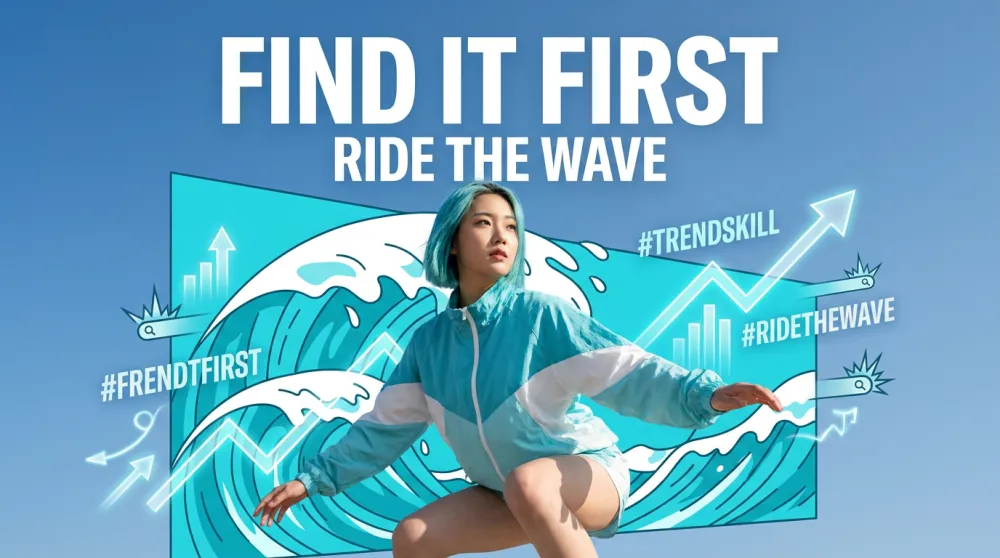
Publish first, rank first. This prompt surfaces what's trending before your competitors notice.
You are a content trend analyst. Identify 10 rising topics in the [YOUR NICHE] space that are:

Criteria:
- Trending upward in the last 30–60 days (based on search behavior patterns)
- Not yet saturated (few authoritative articles exist, KD ideally under 30)
- Tied to a real-world trigger (product launch, regulation, cultural moment, new research)
- Actionable: a creator could write a 1,500-word article on it today

For each topic, provide:
1. Suggested article title
2. Estimated search intent (informational / navigational / transactional)
3. Why it's trending right now
4. Ideal content angle (how-to / listicle / opinion / vs comparison)
5. One competing article URL to beat (if known)

Niche: [YOUR NICHE]
Prompt 7 — Script Skill: 60-Second Short-Form Video Script

TikTok, Reels, YouTube Shorts — every platform rewards the same thing: tight scripts that hook fast.
You are a short-form video scriptwriter. Write a 60-second script for a video about: [YOUR TOPIC]

Format (timestamp-based):
0:00–0:03 — Hook: one shocking sentence or bold visual cue description
0:03–0:10 — Problem setup: why this matters to the viewer right now
0:10–0:45 — Value delivery: 3 punchy points, each 10–12 seconds, plain language only
0:45–0:55 — Proof or result: a specific number, outcome, or before/after
0:55–1:00 — CTA: one action, no more

Rules:
- Sentences must be under 12 words each
- No filler phrases ("In this video I will show you...")
- Write for spoken delivery — read it aloud and time it
- Include 2 B-roll suggestions per section in brackets [B-ROLL: ...]

Topic: [YOUR TOPIC]
Prompt 8 — Monetize Skill: Map Every Income Stream in Your Niche

Most creators leave 80% of their potential income on the table. This prompt maps all of it.
You are a creator monetization strategist. Analyze the [YOUR NICHE] content niche and identify every viable income stream available to a creator with [YOUR AUDIENCE SIZE] followers/subscribers.

For each stream, provide:
1. Income model (affiliate / sponsorship / digital product / service / community / ads)
2. Realistic monthly earning range for this niche and audience size
3. Time to first dollar (days / weeks / months)
4. Effort level (low / medium / high)
5. Best first step to activate it this week
6. One creator in this niche already doing it successfully (if known)

Prioritize by: fastest to revenue first, highest ceiling second.
Niche: [YOUR NICHE]
Current audience size: [YOUR AUDIENCE SIZE]
Content platforms: [YOUR PLATFORMS]
Prompt 9 — Affiliate Skill: Honest Product Review That Actually Converts
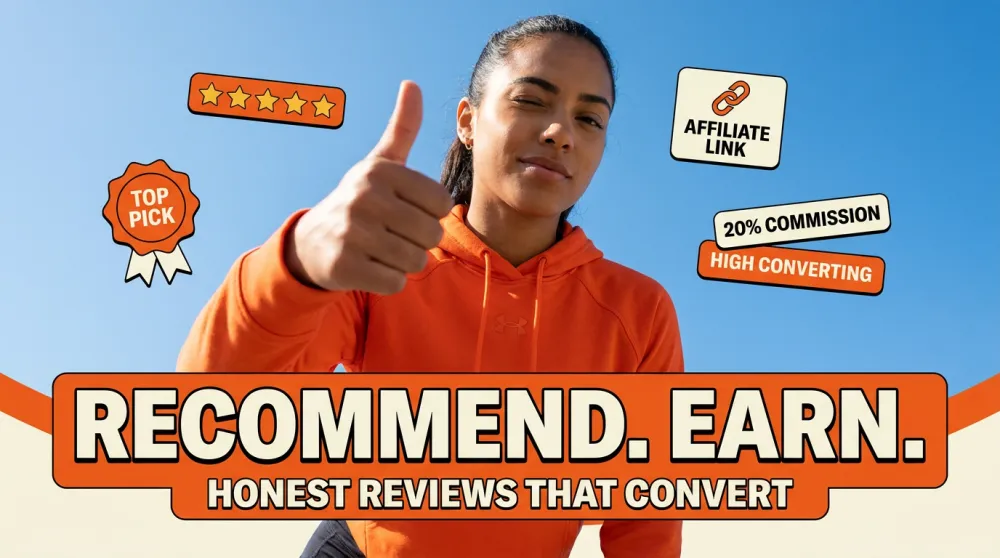
The reviews that convert aren't the ones that praise everything — they're the ones readers trust.
You are an affiliate content writer. Write an honest, SEO-optimized review of [PRODUCT NAME] for a [TARGET AUDIENCE] audience.

Structure:
1. TL;DR box (3 bullets: best for, not ideal for, verdict score /10)
2. What it is (2 sentences, no fluff)
3. What I tested (specific use cases you ran it through)
4. What worked well (3 genuine strengths with specific evidence)
5. What didn't (1–2 real weaknesses — this builds trust and boosts conversions)
6. Who it's best for (3 reader types with scenarios)
7. Who should skip it (be honest — this protects your credibility)
8. Final verdict + affiliate CTA (natural, not pushy)

Tone: direct, specific, no marketing language. Write like you're texting a friend who asked for your honest take.
Product: [PRODUCT NAME]
Target audience: [TARGET AUDIENCE]
Your experience with it: [BRIEF NOTES ON YOUR USAGE]
Prompt 10 — Thumbnail Skill: AI Image Prompt for a Click-Worthy Cover
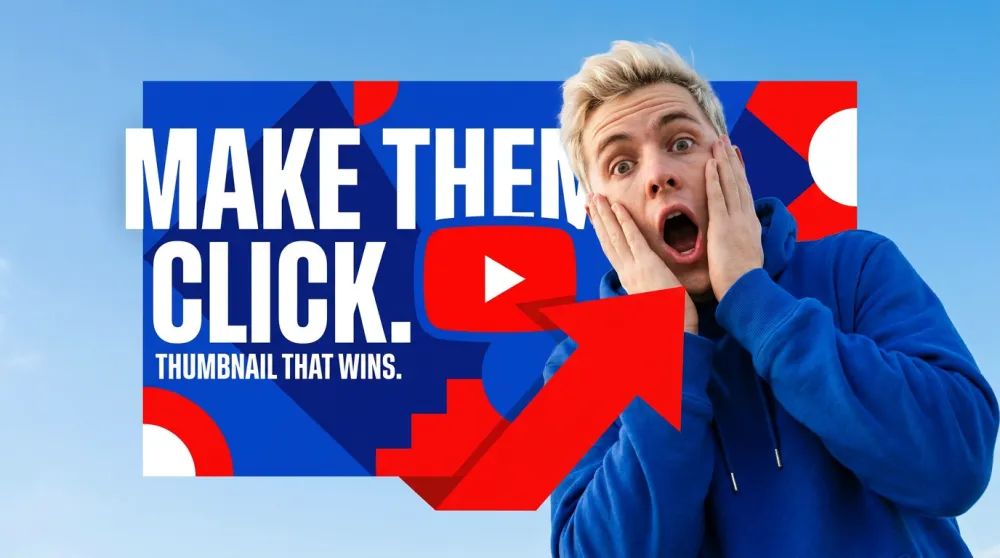
Paste the output of this prompt directly into iMini AI to generate a professional cover image in seconds — no designer needed.
You are a creative director. Generate a detailed AI image generation prompt for a blog cover image on the topic: [YOUR ARTICLE TITLE]

The prompt must specify:
1. Visual style (e.g., flat illustration / photorealistic / 3D render / editorial photography)
2. Subject and action (who is in the image and what are they doing)
3. Color palette (2–3 dominant colors that match the article's tone)
4. Typography overlay suggestion (headline text + placement + font style)
5. Mood/emotion (e.g., energetic, calm, urgent, inspiring)
6. Composition (foreground, midground, background elements)
7. Aspect ratio: 3:2 for blog cover
8. What to avoid (clichés, overused stock photo vibes, dark/gloomy tones)

Output a single, clean paragraph prompt ready to paste into an AI image generator like iMini AI.
Article title: [YOUR ARTICLE TITLE]
Target audience: [YOUR AUDIENCE]
Real Ways to Monetize Your Codex Skill-Powered Content
Traffic without monetization is just a hobby. Here's how creators are turning Codex-powered content volume into actual income:
Affiliate marketing at scale: With 25+ articles published per week, you have room to test dozens of affiliate programs simultaneously. The ones that convert get more content. The ones that don't get dropped — fast. Codex can even write comparison articles that naturally embed your affiliate links.
Selling Skills themselves: If you build a Skill that solves a specific niche problem — say, a Real Estate Listing Skill or a Shopify Product Description Skill — you can sell access to it. Early movers on Skill marketplaces are already seeing $500–$3,000/month from single Skills.
Content agency services: Once you can produce 20 high-quality, SEO-optimized articles per week at near-zero marginal cost, you can sell that output to SMBs and startups who need content but can't hire a full editorial team. Pricing at $50–$150 per article for AI-assisted work is common and increasingly expected.
The iMini AI Advantage: Visuals That Match Your Codex Workflow
Great content without great visuals loses half its impact. iMini AI is the natural companion to a Codex content workflow. Its infinite Canvas lets you plan, draft, and visualize content side by side. The AI image generation models (including Nano Banana Pro and Seedream 4.0) produce blog covers, infographics, and social media images in seconds — with the same quality as a professional designer.
When your Thumbnail Skill outputs a detailed image prompt, paste it directly into iMini and get a ready-to-publish cover in under 30 seconds. No Photoshop. No Canva templates. No waiting on a designer.
About iMini AI
iMini AI is an all-in-one AI creation platform designed for the modern content creator. Whether you're generating images with cutting-edge models like Nano Banana Pro, collaborating across Claude, GPT, and Gemini in a single interface, or building multi-step content workflows on an infinite canvas, iMini gives you every tool you need to produce, iterate, and publish faster.
For creators using Codex Skill workflows, iMini completes the loop: Codex handles the text and logic layer, iMini handles the visual layer. Together, they form a full-stack content production system that would have required a team of five people just two years ago.
Try it at imini.com.
Summary
Codex Skill is not just a productivity tool — it's a business model. By compressing the time between idea and published content, it gives individual creators the output capacity of a full editorial team. The 10 prompts above are your starting kit: pick one, run it today, and watch how fast the workflow clicks. The creators who figure this out first will own the SEO real estate, build the audiences, and lock in the monetization deals before everyone else catches up.