
AI Model Watch 2026: What Gemini 3.5 Pro, GPT-Next, and Claude Fable Mean for Creators
July 24, 2026
The AI model news cycle is no longer just a race of bigger numbers and louder leaks. For creators, the real question is simpler: which model changes the way content gets researched, planned, written, visualized, localized, and published? A model release matters when it reduces the distance between a useful idea and a finished creative asset.
Today’s model watch has three levels of certainty. Claude Fable is already released, so creators can discuss it as a real creative-writing model rather than an upcoming rumor. Gemini 3.5 Pro should still be treated as a watchlist topic unless Google confirms it publicly. GPT-Next is not an official OpenAI product name here; it is only shorthand for the kind of next-generation OpenAI capability creators expect to see: stronger agent planning, better tool use, richer multimodal reasoning, and smoother production workflows.
This distinction matters. AI news can bring traffic quickly, but it can also damage trust quickly. A creator who turns every rumor into a fake launch headline may get clicks once, then lose authority. A better strategy is to explain what is confirmed, what is uncertain, and what creators can do with the signal right now. That is where iMini Agent becomes useful: it can help turn messy model news into grounded research, practical prompts, visual ideas, and publish-ready content.
What Actually Changed
Claude Fable is the clearest anchor for this article because it has moved from speculation into availability. That makes it relevant for creators who write narrative campaigns, character-driven scripts, dialogue scenes, fictional explainers, branded storytelling, YouTube intros, and long-form content that depends on style consistency. The useful angle is not simply “a new model exists.” The useful angle is that creative models are being positioned around voice, pacing, character logic, and narrative control.
Gemini 3.5 Pro is a different kind of topic. It may be interesting to monitor, especially because creators care about multimodal planning, video understanding, fast research synthesis, and cross-format content generation. But until there is a public announcement, the right framing is watchlist, not launch. That still gives creators something valuable to write about: what stronger Gemini capability would mean for YouTube workflows, image-to-video planning, SEO research, and multilingual content.
GPT-Next also needs careful language. It should not be written as if it were an official OpenAI model name. Instead, use it as a creator-facing shorthand for the next capability jump people are waiting for. The most important expectation is agentic execution: models that can plan multi-step tasks, use tools more reliably, compare sources, produce visual briefs, and quality-check output before publishing.
Why This Matters for Creators
Creators do not need one more generic chatbot response. They need a system that converts fast-moving news into decisions. Which topic should be covered now? Which claims are safe? Which claims need caution? Which prompt pack can become evergreen? Which images or videos would make the article more useful? Which version should be localized for English, Simplified Chinese, Traditional Chinese, and Japanese readers?
This is how AI news becomes practical traffic. A shallow article that says “a new model is coming” ages in hours. A deeper article can keep ranking because it teaches readers how to use the news. For iMini, the stronger traffic angle is not model gossip by itself. It is “model news into creator workflow”: prompts, scripts, thumbnails, visuals, localized drafts, and quality checks.
The iMini Agent Opportunity
iMini Agent fits this topic because the high-value workflow is a chain, not a single answer. The agent can start by separating official sources from rumors. Then it can summarize creator implications, build article angles, generate prompt packs, draft social hooks, propose image concepts, and check the final copy for overclaiming. That is much closer to how creators actually work.
For Claude Fable, iMini Agent can create narrative tests, dialogue prompts, brand-voice samples, and YouTube script experiments. For Gemini 3.5 Pro watchlist coverage, it can build a careful explainer that avoids fake certainty while still giving readers useful preparation steps. For GPT-Next expectations, it can produce a checklist for agent-ready content workflows without pretending an unreleased model has been announced.
8 Practical Prompts for iMini Agent
1. Confirmed vs. Unconfirmed Model Watch
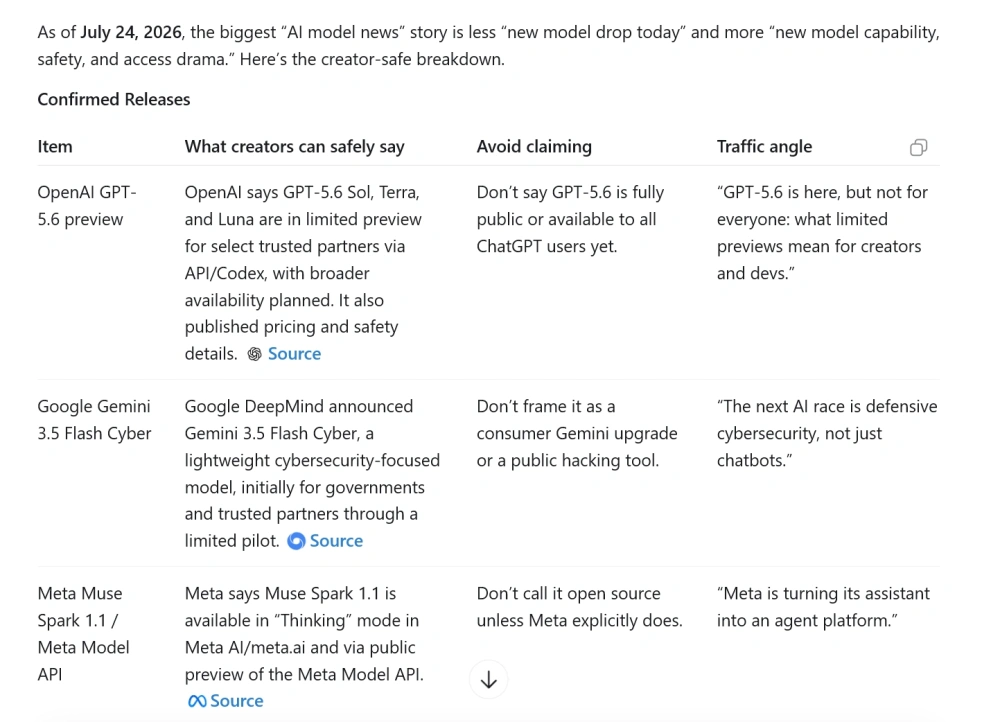
Use this when you want to publish AI news without turning speculation into false certainty.
Analyze today’s AI model news for creators. Separate confirmed releases, official statements, credible but unconfirmed signals, and pure speculation. For each item, explain what creators can safely say, what they should avoid claiming, and what content angle could attract traffic without misleading readers.
2. Creator Workflow Impact Map
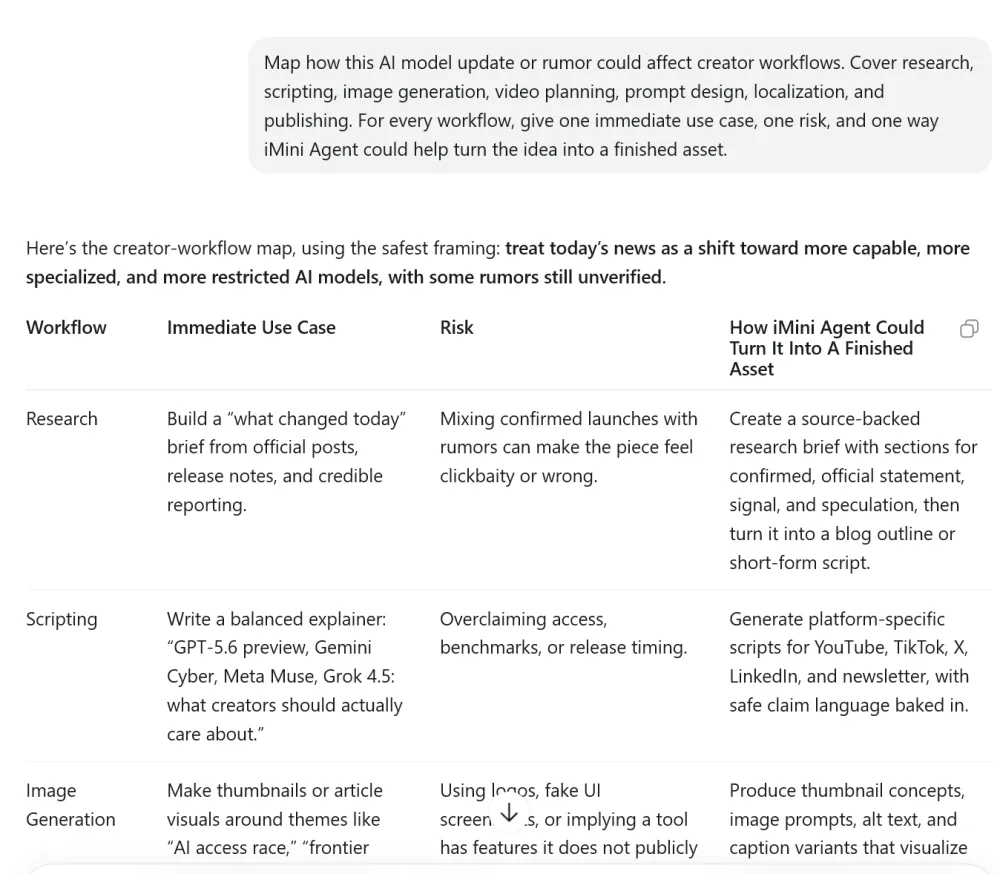
This prompt turns model news into concrete production decisions.
Map how this AI model update or rumor could affect creator workflows. Cover research, scripting, image generation, video planning, prompt design, localization, and publishing. For every workflow, give one immediate use case, one risk, and one way iMini Agent could help turn the idea into a finished asset.
3. Claude Fable Creative Test
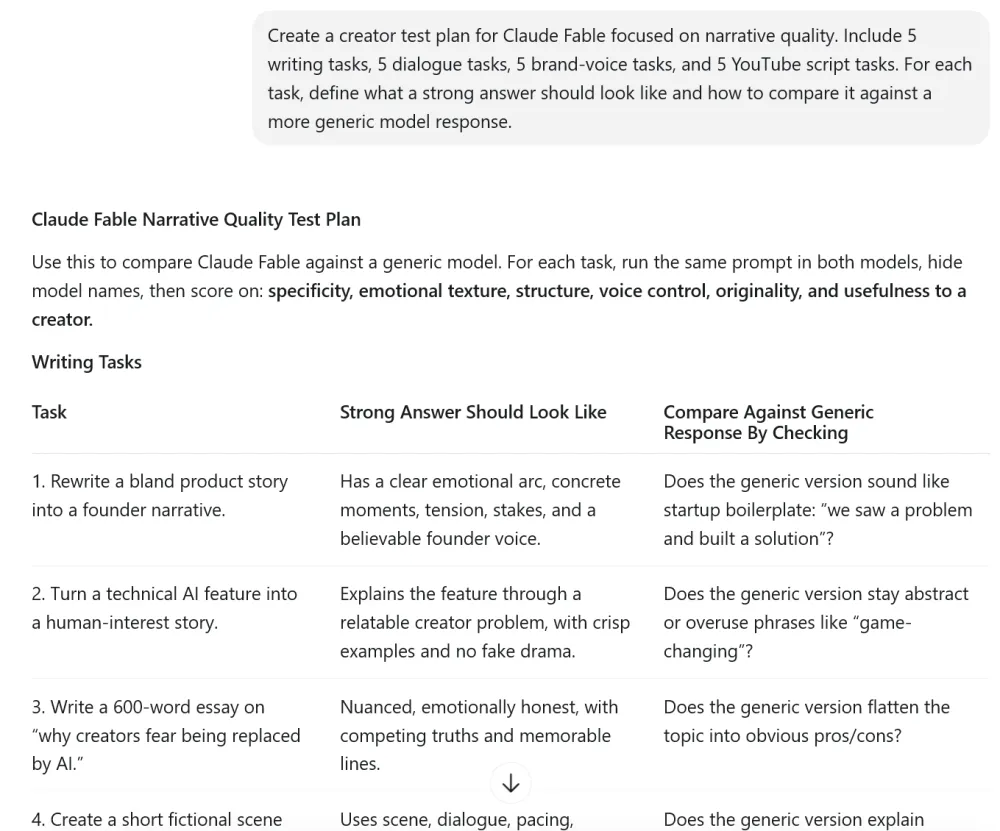
Use this to test narrative quality instead of only asking for generic writing samples.
Create a creator test plan for Claude Fable focused on narrative quality. Include 5 writing tasks, 5 dialogue tasks, 5 brand-voice tasks, and 5 YouTube script tasks. For each task, define what a strong answer should look like and how to compare it against a more generic model response.
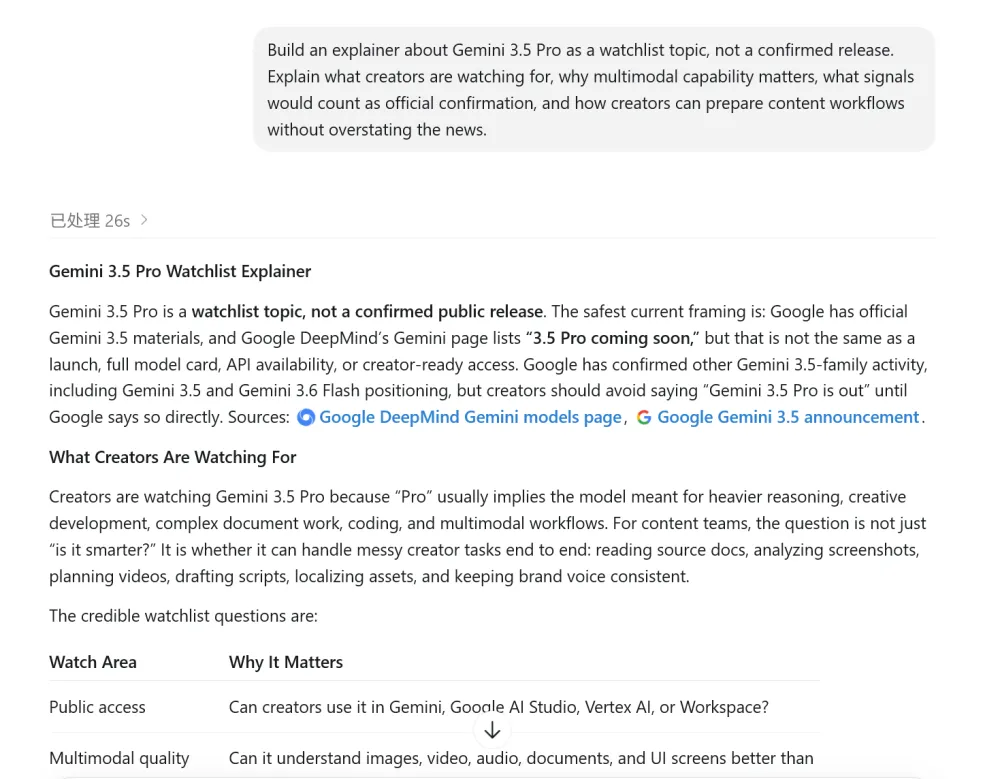
4. Gemini Watchlist Explainer
This keeps Gemini coverage useful while avoiding unsupported launch claims.
Build an explainer about Gemini 3.5 Pro as a watchlist topic, not a confirmed release. Explain what creators are watching for, why multimodal capability matters, what signals would count as official confirmation, and how creators can prepare content workflows without overstating the news.
5. GPT-Next Capability Checklist
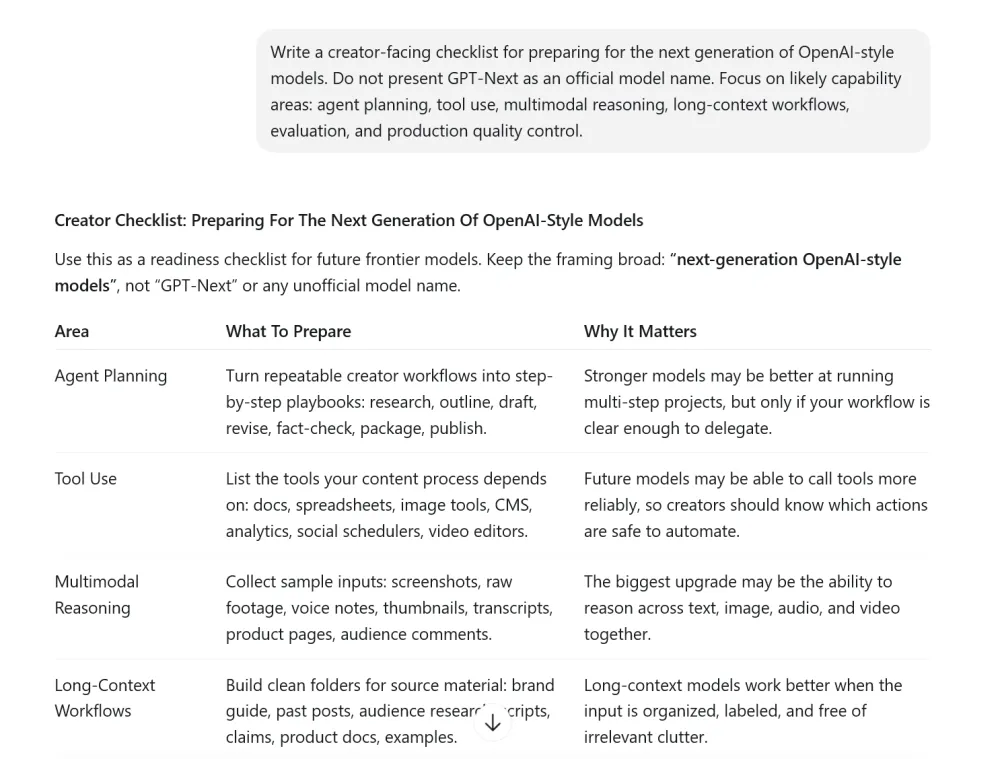
Use this when discussing expected OpenAI-style capability without inventing official names.
Write a creator-facing checklist for preparing for the next generation of OpenAI-style models. Do not present GPT-Next as an official model name. Focus on likely capability areas: agent planning, tool use, multimodal reasoning, long-context workflows, evaluation, and production quality control.
6. Traffic Angle Generator
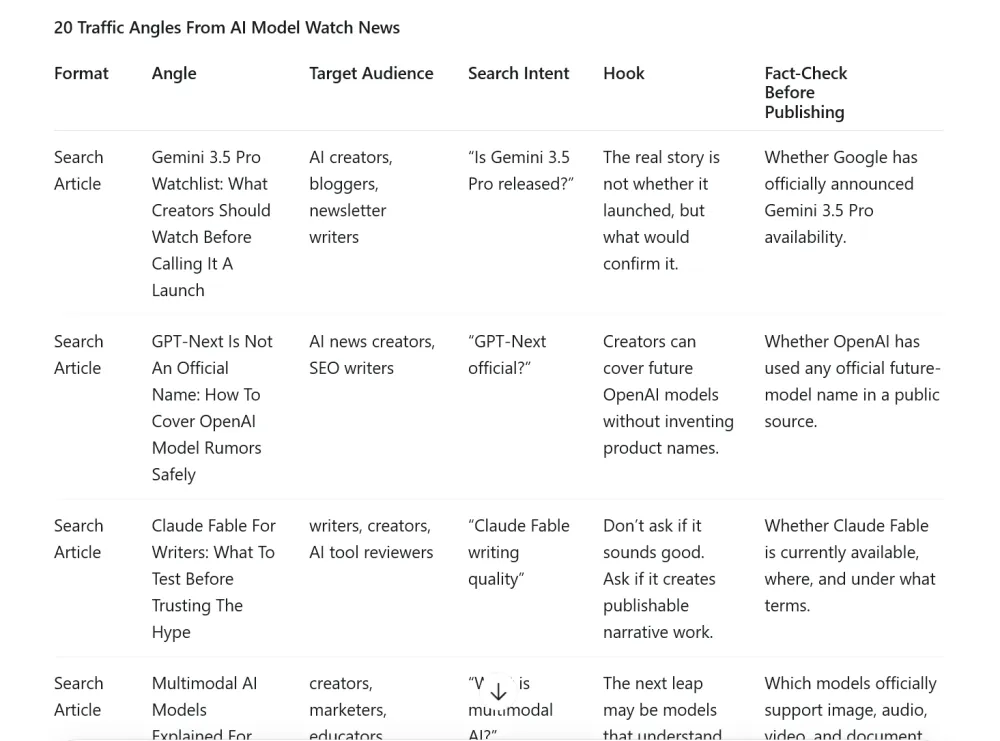
This helps convert model news into search, YouTube, short-form, and social content ideas.
Generate 20 traffic angles from this AI model news. Split them into search articles, YouTube videos, Shorts, X posts, Reddit discussion prompts, and iMini prompt-pack ideas. For each angle, include the target audience, the likely search intent, the hook, and the claim that must be fact-checked before publishing.
7. Multilingual Localization Brief
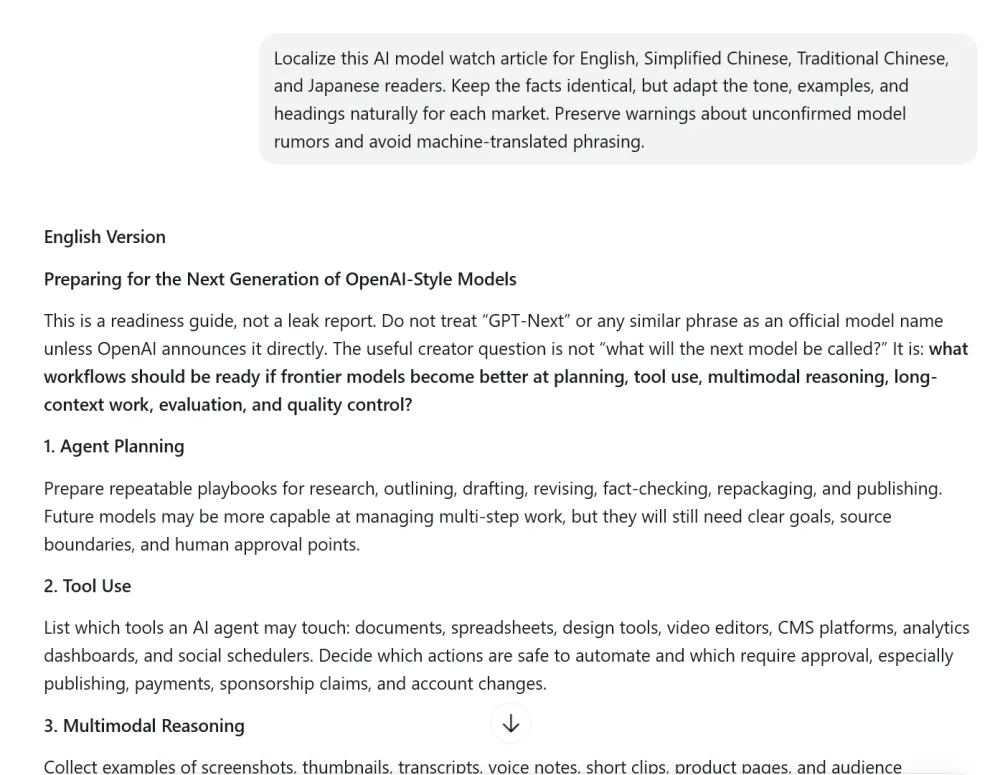
Use this before translating the article for multiple markets.
Localize this AI model watch article for English, Simplified Chinese, Traditional Chinese, and Japanese readers. Keep the facts identical, but adapt the tone, examples, and headings naturally for each market. Preserve warnings about unconfirmed model rumors and avoid machine-translated phrasing.
8. Overclaiming Quality Check
This should be the final pass before publishing any AI model news article.
Review this article for AI-news overclaiming. Flag any sentence that turns a rumor into a fact, uses an unofficial model name as if it were official, implies a release date without evidence, or exaggerates creator impact. Rewrite flagged lines so the article remains interesting but accurate.
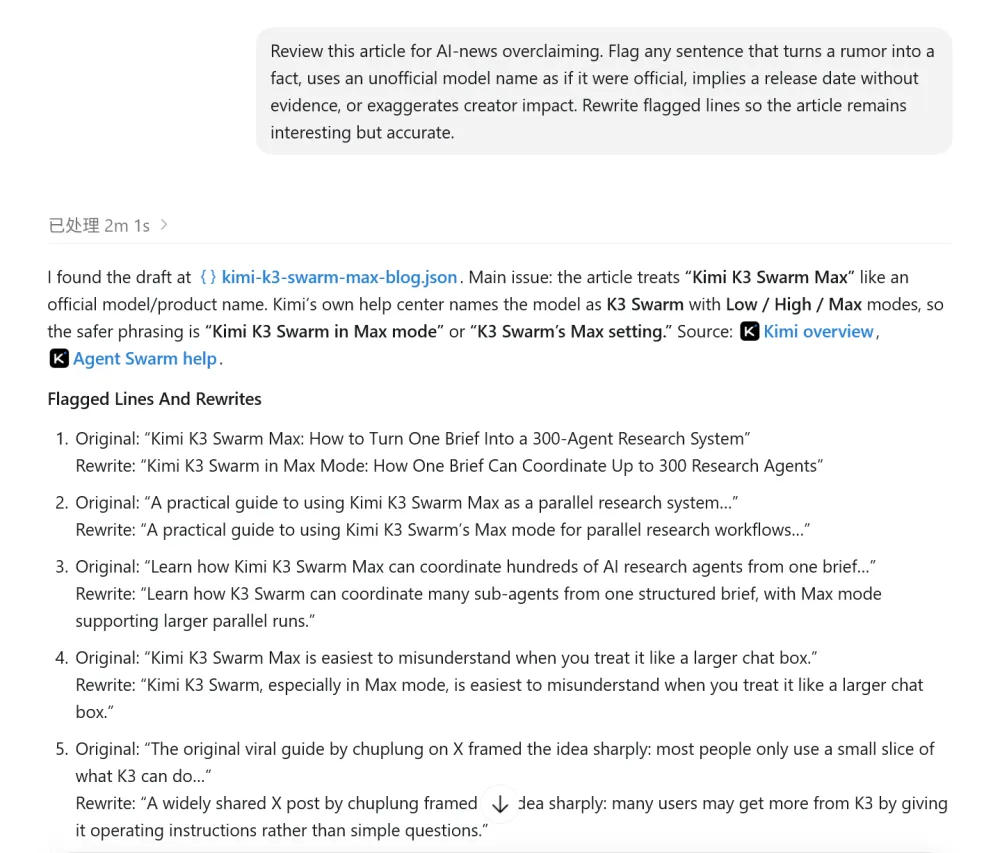
How to Turn This Into Content Now
The fastest traffic path is a practical model-watch article with a creator angle. Start with the confirmed item, Claude Fable, because that gives the article a real anchor. Then add Gemini 3.5 Pro and GPT-Next as watchlist sections with careful labels. Finally, bring the article back to action: what creators should test, what prompts they should prepare, and how iMini Agent can turn the news into scripts, hooks, images, and localized drafts.
This structure works because it satisfies two search intents at once. Readers who want news get the model context. Readers who want utility get prompts and workflows. iMini benefits because the article naturally shows why an agent is useful when the AI news cycle is noisy, fast, and difficult to verify.
What Not to Overclaim
Do not write that Gemini 3.5 Pro has launched unless there is an official announcement. Do not present GPT-Next as an official OpenAI model name. Do not make Claude Fable sound upcoming if the relevant release has already happened. These wording choices are small, but they are the difference between a useful model watch and a rumor article that loses reader trust.
About iMini
iMini is an AI creation platform for turning ideas into images, videos, copy, prompts, and creator workflows. With iMini Agent, creators can transform fast-moving AI news into structured research, practical prompt packs, visual concepts, multilingual articles, and campaign-ready content while keeping the final output grounded and accurate.
Sources
Anthropic: Claude Fable 5 and Mythos 5 announcement
Anthropic: Redeploying Fable 5
Anthropic Claude Fable product page
FAQ
Is Claude Fable already released?
Yes. The safe framing is that Claude Fable is already released, so creators can discuss it as an available creative model rather than an upcoming rumor.
Is Gemini 3.5 Pro confirmed?
Only treat Gemini 3.5 Pro as confirmed if Google publishes an official announcement. Until then, it is better framed as a watchlist topic or rumor.
Is GPT-Next an official OpenAI model name?
No. In this article, GPT-Next is used only as shorthand for expected next-generation OpenAI-style capability, not as an official product name.
Why connect model news with iMini Agent?
Because creators need more than headlines. iMini Agent can turn model news into prompts, scripts, thumbnails, visual directions, localized drafts, and quality checks that are ready for real production.