
Top 10 AI Codex & Agent Breakthroughs Reshaping Creative Work in 2026
June 26, 2026
AI agents are no longer experimental demos — they're shipping code, generating images, writing content, and deploying products autonomously in 2026. The rise of AI coding agents like Codex, Claude Code, and Devin has fundamentally changed what it means to build software, while multi-agent creative pipelines are reshaping entire industries. Here's this week's digest of the top 10 breakthroughs you can't afford to miss.
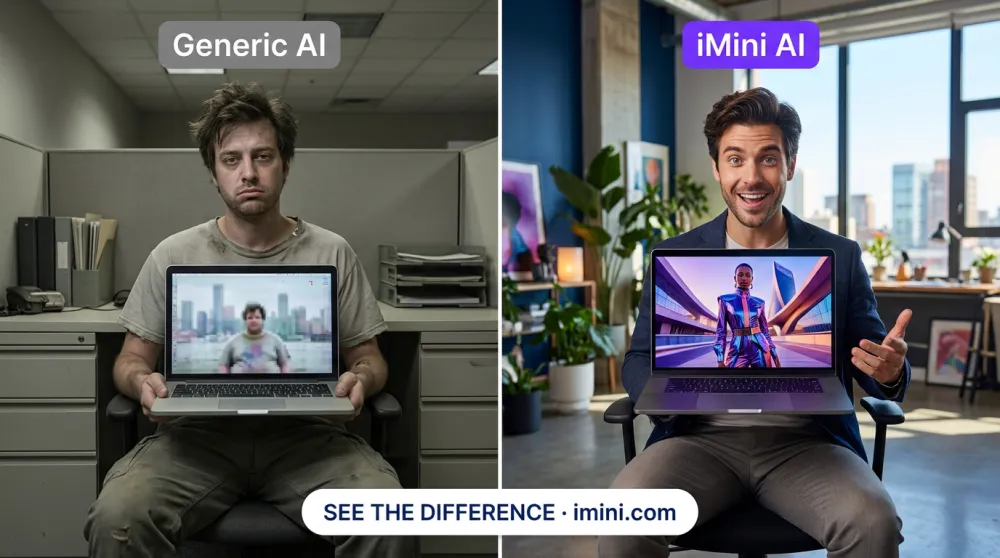
Left: Generic AI output — blurry, flat, uninspired | Right: iMini AI — sharp, vibrant, professional quality
Top 10 AI Codex & Agent Breakthroughs of 2026
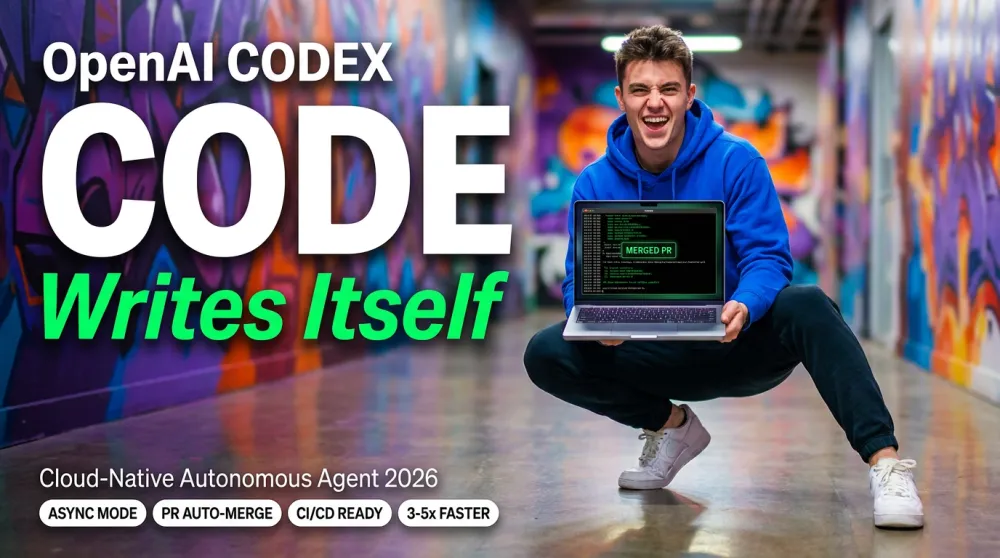
1. OpenAI Codex Goes Fully Cloud-Native
OpenAI's Codex has evolved from a code completion tool into a fully cloud-based autonomous coding agent. Developers can now delegate entire feature development cycles — reading codebases, writing tests, fixing bugs, and opening pull requests — all without any human in the loop. The model operates asynchronously, letting developers submit tasks and return to finished code hours later. Early adopters report 3–5× productivity gains on repetitive backend tasks. With API access now open, Codex is being embedded into CI/CD pipelines, developer portals, and third-party platforms, making it the backbone of autonomous coding workflows in 2026.
2. Claude Code Reaches Mainstream Adoption
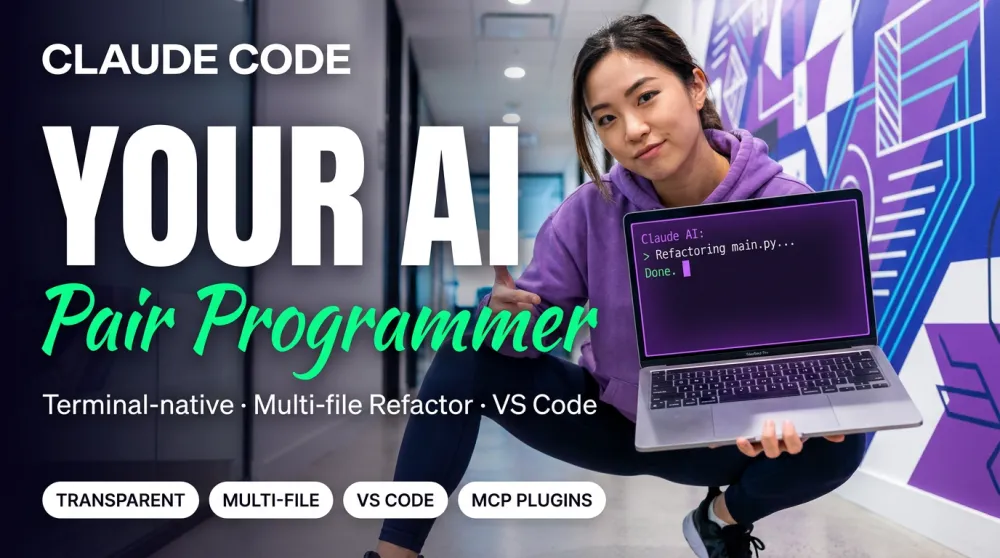
Anthropic's Claude Code has crossed from power-user territory into everyday developer tooling. The terminal-native AI agent handles multi-file refactors, runs test suites, debugs CI failures, and executes shell commands — all from a single conversation. What makes Claude Code stand out is its judgment and transparency: it asks clarifying questions before irreversible actions and explains its reasoning at each step. With native integrations for VS Code and JetBrains, plus a growing MCP plugin ecosystem, Claude Code has become the go-to AI pair programmer for teams who need context-aware intelligence, not just autocomplete.
3. GitHub Copilot Workspace Opens Agent Mode to All
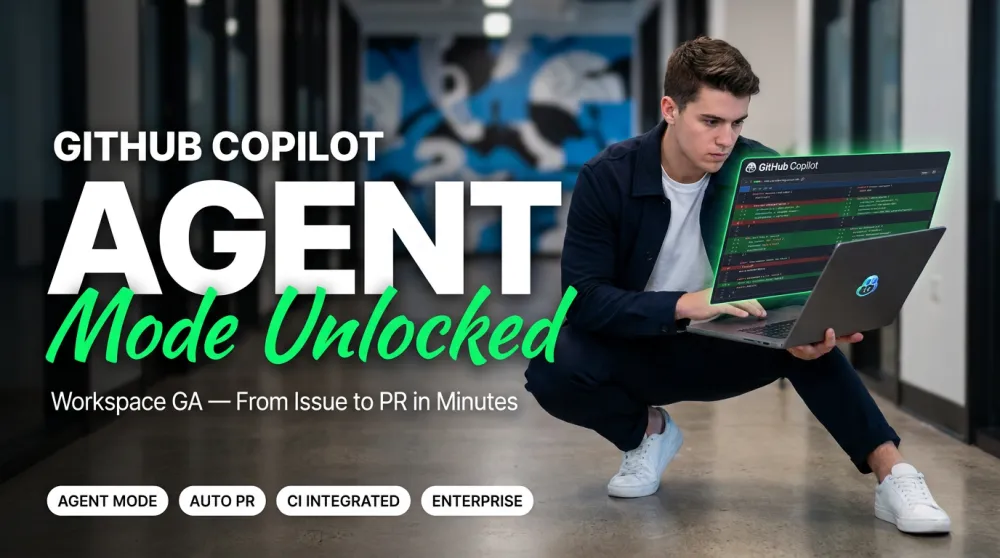
Microsoft's GitHub Copilot Workspace reached general availability in 2026, bringing full agent mode to millions of developers worldwide. Workspace takes a GitHub Issue and produces a complete, diff-ready implementation — planning the approach, writing code across multiple files, running tests, and drafting PR descriptions. Its deep integration with GitHub Actions means AI-assisted code changes can be triggered directly from CI failures. For enterprise teams, Copilot Workspace has become the bridge between product specifications and production code, compressing the iteration cycle from days to minutes.
4. Google Jules: The Async Agent That Works While You Sleep
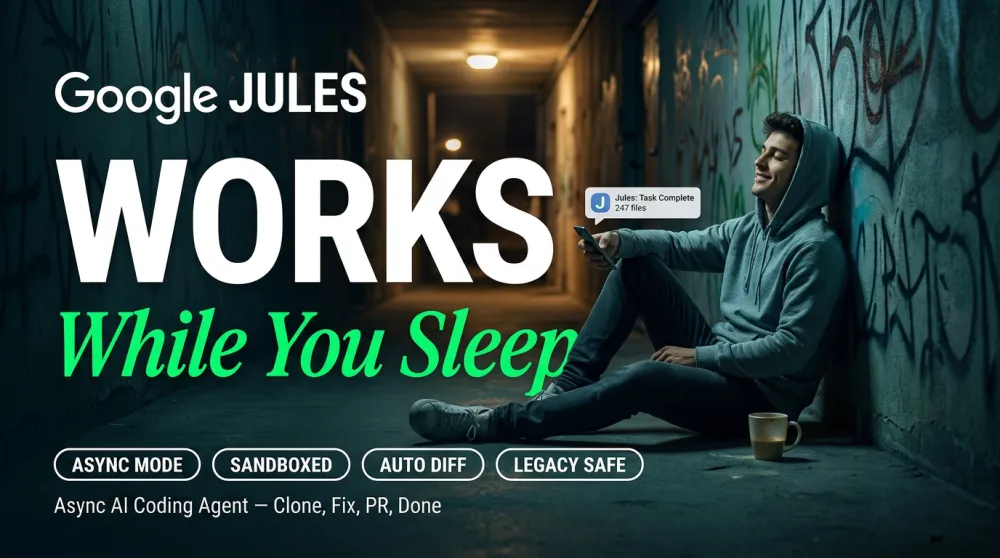
Google's Jules is a breakthrough in asynchronous AI coding. Unlike real-time copilots, Jules accepts a task, clones your repository, spins up a sandboxed cloud environment, completes the work, and presents detailed diffs for human review. Jules excels at long-running maintenance: upgrading dependencies, migrating deprecated APIs, and adding test coverage to legacy code. In benchmarks, Jules outperforms junior engineers on specific maintenance tasks — completing them in minutes with higher consistency. The async model fits naturally into developer workflows: assign and forget, then review when ready.
5. Cursor Launches Background Agents for Parallel Execution
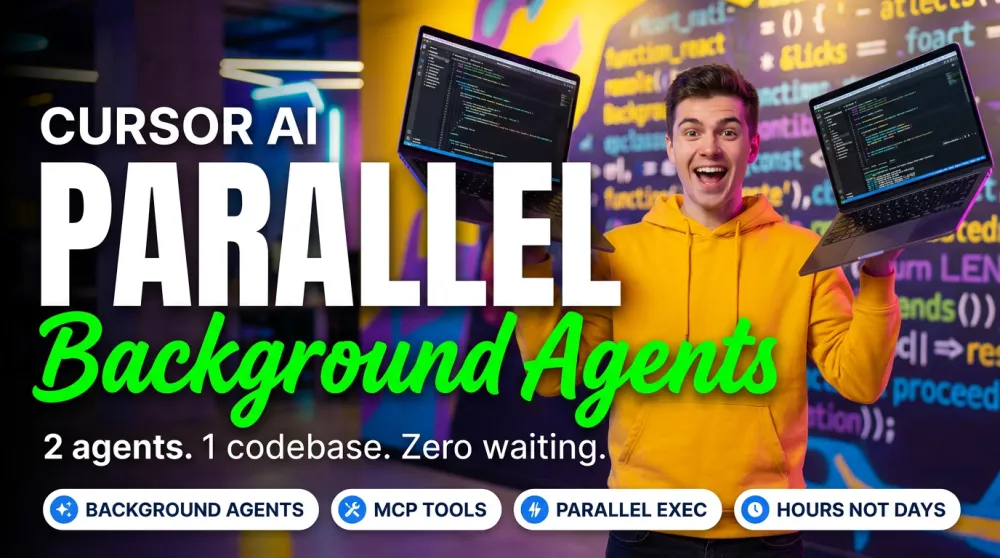
Cursor raised the bar with its background agents feature, enabling multiple AI agents to run in parallel across the same codebase. One agent handles backend API changes while another updates the frontend, with a third writing tests — all running concurrently and merging changes intelligently. This architecture compresses multi-day feature sprints into hours. Cursor's background agents support MCP tools, giving each agent access to databases, external APIs, and documentation. Every background agent effectively becomes a full-stack developer tackling independent workstreams without blocking the human engineer.
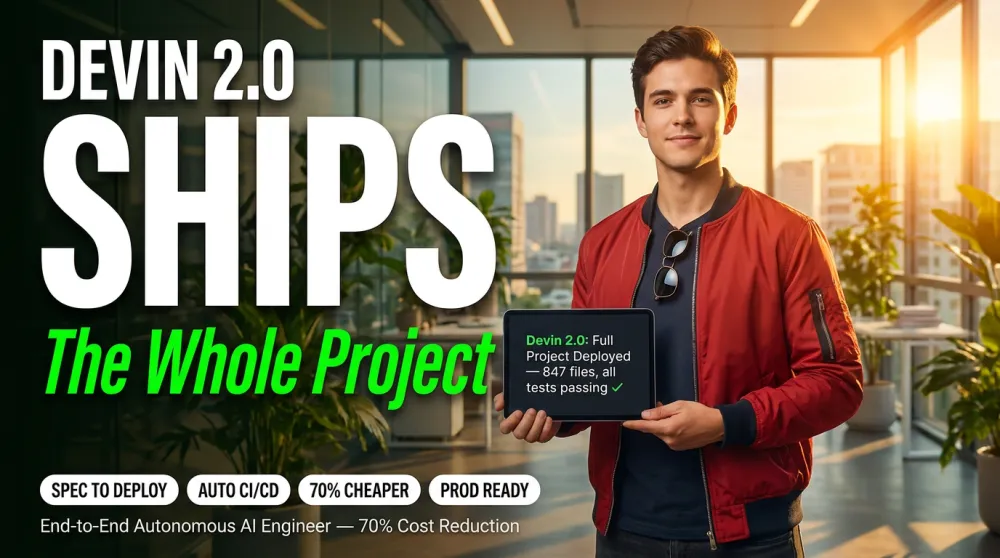
6. Devin 2.0 Completes End-to-End Software Projects Solo
Cognition's Devin — the world's first fully autonomous AI software engineer — shipped its 2.0 release with dramatically improved performance and 70% lower cost per completed task. Devin 2.0 handles entire software projects from spec to deployment: writing code, setting up CI/CD, debugging production errors, and maintaining documentation. Enterprise customers report Devin autonomously completing customer onboarding integrations, API wrappers, and internal tooling — tasks that previously required dedicated engineering sprints. Devin 2.0 now operates as a reliable async team member, not an experimental curiosity.
7. GPT Image 2 Plugs Into Agent Pipelines for Creative Automation
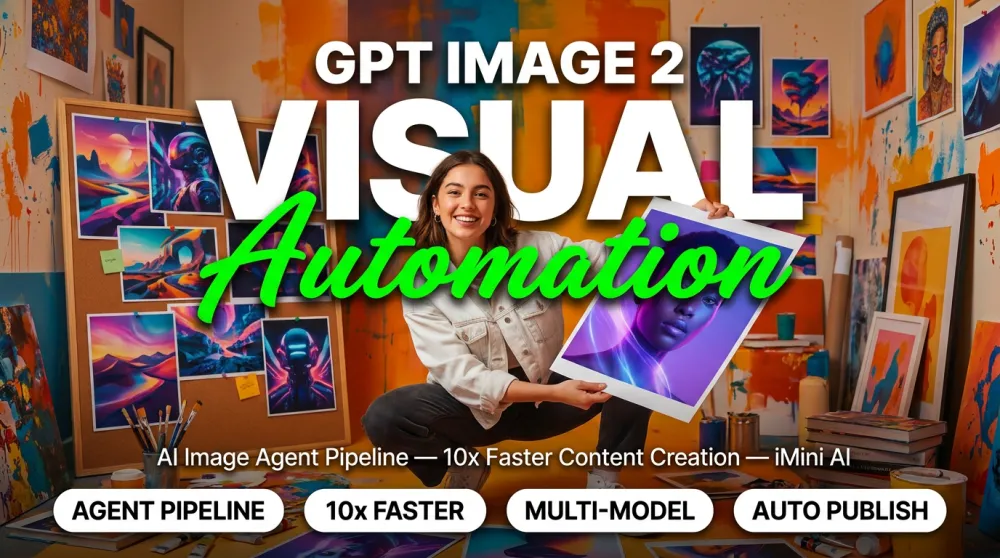
The integration of advanced image generation into agentic workflows is unlocking a new category of creative automation. Teams are building end-to-end pipelines where an AI agent writes content, generates matching visuals, and publishes — all without human intervention. Platforms like iMini AI make this accessible with a multi-model canvas where image generation, writing, and editing agents work together seamlessly. Creative teams using agentic image pipelines report producing campaign assets 10× faster than traditional workflows. Here's an example prompt powering these visual pipelines:
Commercial lifestyle advertising photograph, VIVAJUICE poster style for creative tools. Creative director in white jacket crouching, holding up a large printed AI-generated editorial portrait — stunning purple-blue gradient. Proud showing-off expression. Bold text overlay: "VISUAL Automation · GPT Image 2 Agent Pipeline · 10x Faster". Badge row: AGENT PIPELINE | 10x FASTER | MULTI-MODEL | AUTO PUBLISH.
8. Multi-Agent Creative Studios Are Replacing Traditional Content Teams
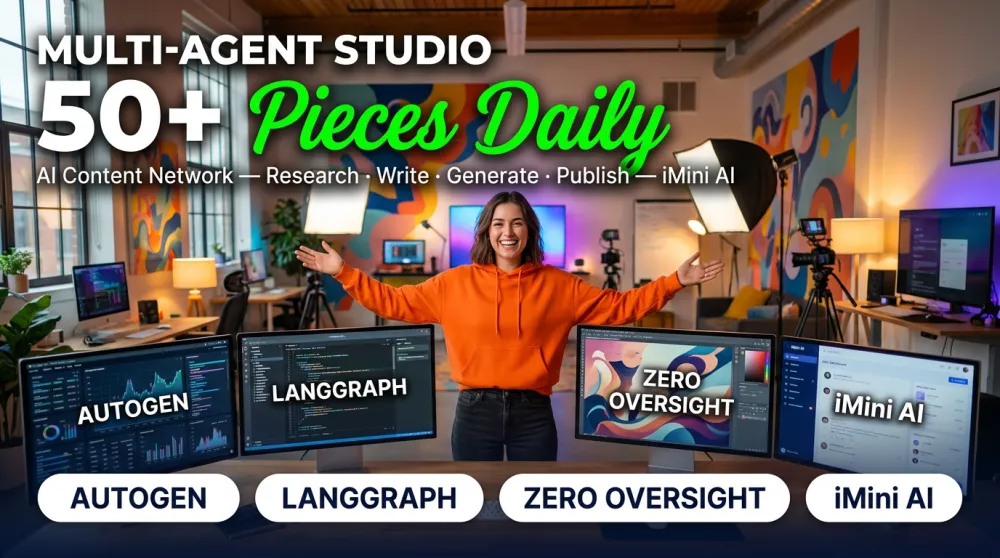
The shift from single-model tools to coordinated multi-agent systems is transforming content production at scale. Forward-thinking studios run agent networks where one AI researches trending topics, another drafts copy, a third generates visuals, and a fourth handles distribution and SEO. These systems produce 50+ pieces of polished content daily with minimal human oversight. Platforms like AutoGen, LangGraph, and iMini AI's multi-model canvas make these pipelines accessible to non-engineering teams. Human creativity is being redirected toward strategy and curation rather than execution.
9. AI Video Agents Enter the Agentic Loop (Kling + Sora Integration)
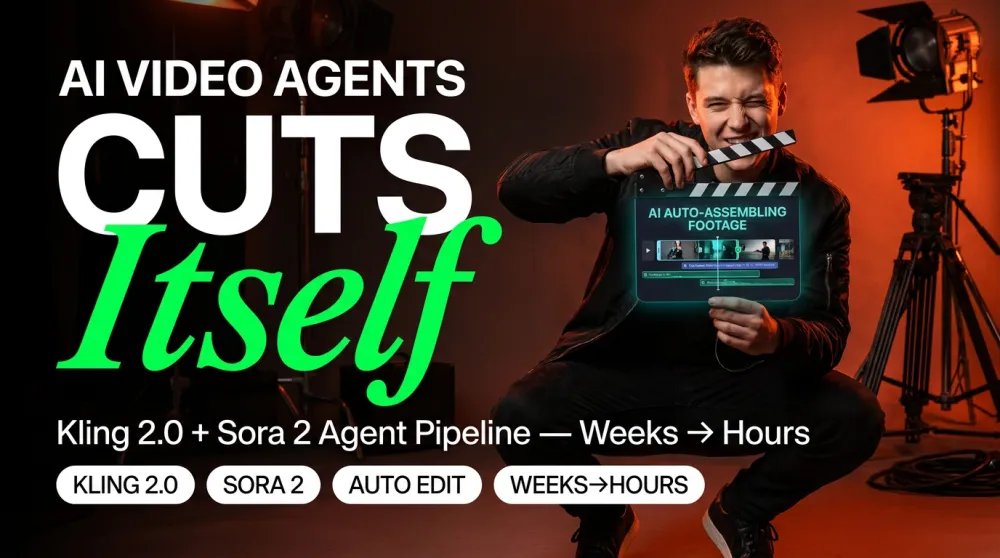
Video generation is the newest frontier for agentic creative workflows. AI video models like Kling 2.0 and Sora 2 are being wired into agent pipelines that automatically generate b-roll footage, promotional clips, and social media videos from text briefs. Marketing agencies report cutting video production from weeks to hours for standard formats. The key innovation is the feedback loop: agents evaluate generated video quality, regenerate unsatisfactory clips, and assemble final cuts with minimal human direction. As controllability improves, AI video agents are set to disrupt video production the way LLMs disrupted copywriting.
10. The "Vibe Coding" Movement Goes Mainstream
"Vibe coding" — coined by Andrej Karpathy — describes building software entirely through natural language prompts to AI agents, without writing traditional code. What started as an experiment has become a genuine movement: non-programmers are shipping production apps, internal tools, and side projects using conversational prompts to Claude Code, Cursor, or Copilot. The barrier to software creation has never been lower. Here's a typical vibe coding prompt that ships a working app:
Build me a Pomodoro timer web app with a glassmorphism UI, purple gradient background, session tracking, sound notifications, and local storage for stats. Deploy it as a single self-contained HTML file I can open in any browser — no build step needed.
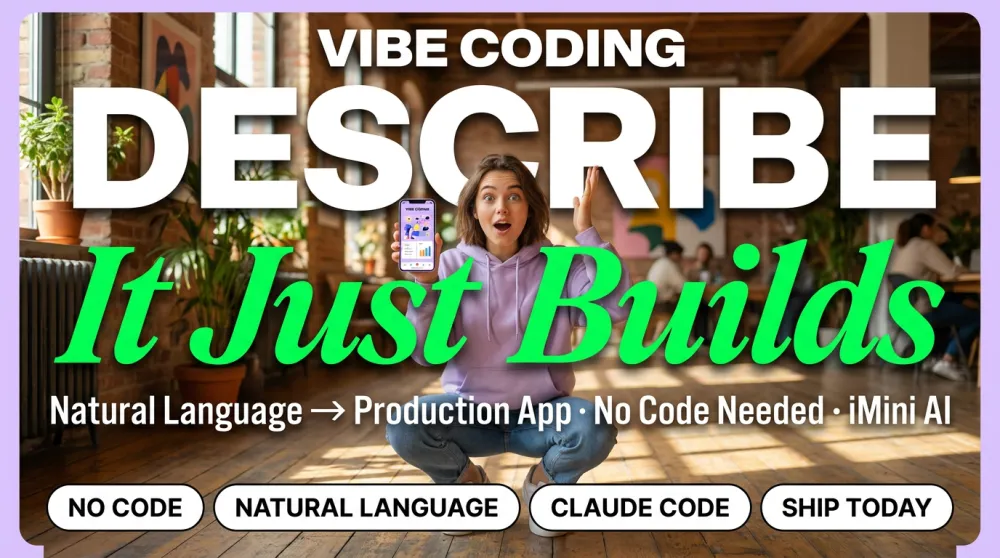
Entire companies are now being built by solo founders using nothing but vibe coding. Try it yourself at iMini AI.
📎 Source: Andrej Karpathy on X
About iMini AI
iMini AI is an all-in-one AI creative platform bringing together the world's leading models — image generation, video creation, intelligent writing, and multi-model canvas collaboration — in a single workspace. Whether you're a developer exploring agent workflows or a creative professional building content pipelines, iMini AI gives you the tools to build, create, and ship faster than ever before.
Summary
From cloud-native coding agents to the vibe coding movement, 2026 is the year AI agents stopped being tools and started being teammates. The top 10 breakthroughs this week all point in one direction: the future of work is agentic, and it's already here. Start building your own agent-powered workflow at iMini AI.