
AI Agent News and Predictions: Why iMini Turns Model Hype Into Workflows
Published on July 16, 2026
AI news used to be easy to track: a lab released a bigger model, a benchmark moved, and the conversation reset for a week. That rhythm is changing. The more useful question now is not only which model comes next, but which product can turn model capability into finished work.
That is why prediction-style AI topics matter. Rumors about upcoming models, voice agents, coding agents, and multimodal releases are not just gossip. They are early signals about where the interface of AI is moving: away from a blank chat box and toward task systems that plan, generate, revise, and preserve assets.
Summary: AI news is shifting from model announcements to agent workflows. This article explains why prediction-style AI topics, upcoming model rumors, and iMini AI Agent's task workspace point to the same trend: users want AI that can finish work.
The Hot AI Topic Is No Longer Just the Next Model
Model releases still set the tempo of the industry. New reasoning models, faster voice systems, stronger image and video generators, and cheaper small models all change what products can do. But the center of attention is moving from raw capability to productized execution.
The most useful AI products in 2026 will not simply say, “Here is a better answer.” They will say, “Here is the brief, the draft, the image direction, the revisions, and the final asset.” That is the difference between a model demo and an agent workflow.
What Prediction-Style AI News Is Really Telling Us
When AI communities discuss possible model releases in the next two weeks, the details are often uncertain. The signal is still valuable if we read it correctly. A spike in talk about voice agents points to real-time interaction. A spike in coding agents points to long-task execution. A spike in multimodal models points to tools that can move between text, image, video, and documents without forcing the user to restart.
The practical forecast is clear: the next wave of AI products will compete on continuity. Users will care less about whether a system can answer one prompt beautifully and more about whether it can keep context, choose the right tool, and produce something usable at the end.
iMini AI Agent Fits This Shift
The iMini AI Agent product structure shows the same direction. The page is built around New Task, Inspiration, Assets, skills, file uploads, and model selection. That is not the layout of a simple chatbot. It is the layout of a creative and analytical workspace.
The first product signal is New Task. Instead of treating every request as a disposable chat turn, iMini AI Agent frames the interaction as a job to be completed. A user can start with a trend, a file, a campaign idea, or a vague creative brief, then ask the agent to turn it into a structured output.
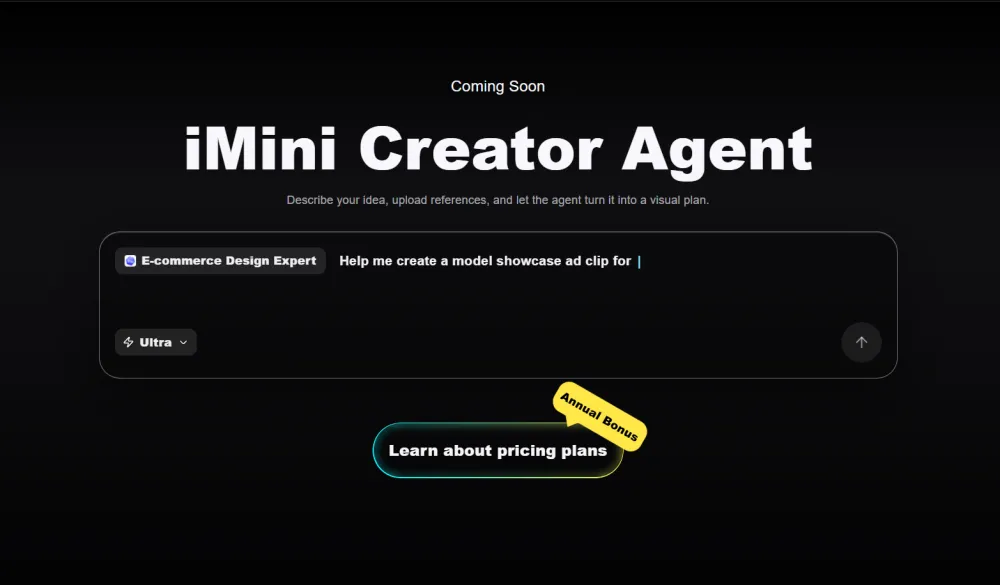
The second signal is the Skills entry. Skills make the agent feel less like one general-purpose assistant and more like a modular production system. Writing, illustration, PPT design, viral analysis, short-video planning, image generation, and video direction can be treated as repeatable workflows rather than one-off prompts.
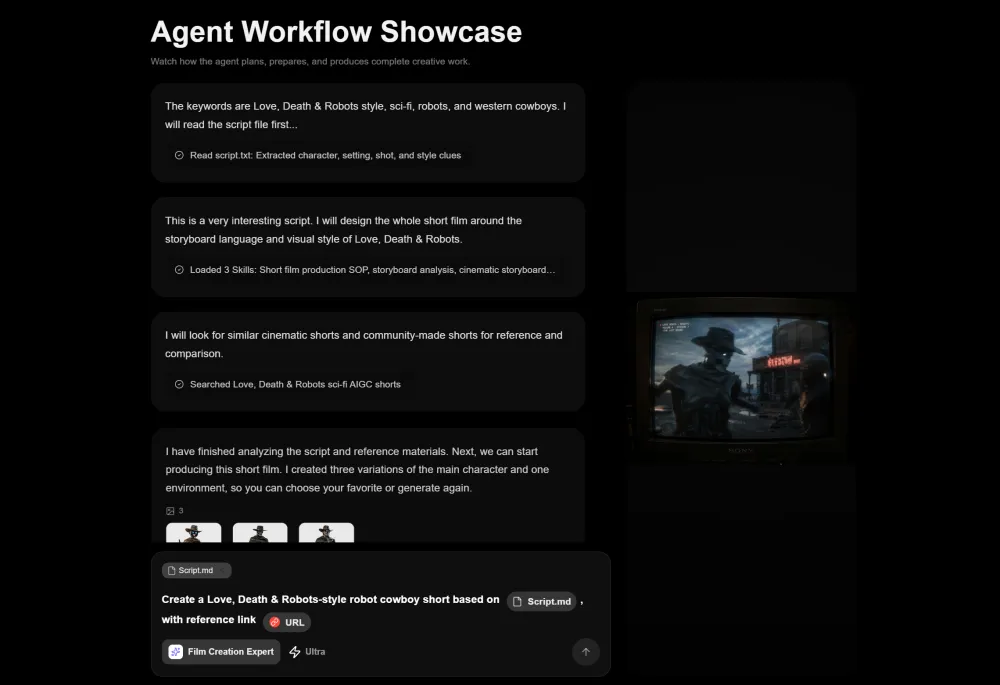
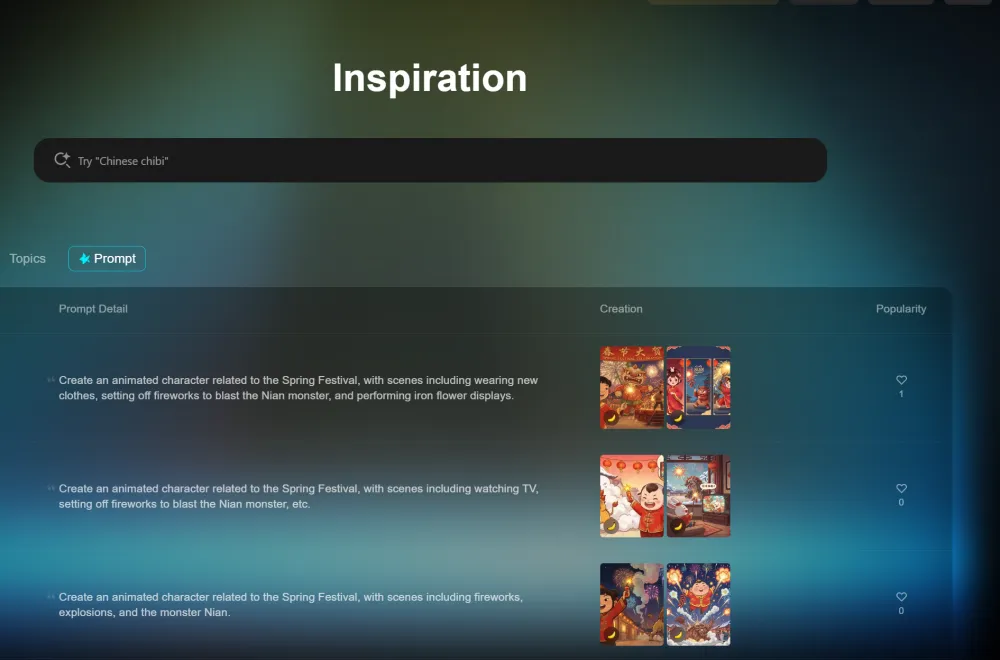
The third signal is Inspiration. For creators, inspiration is not decoration; it is a reusable starting point. A strong inspiration system helps users copy a successful visual structure, adapt a content format, or turn a trending topic into a publishable article, social post, or video plan.
The fourth signal is Assets. This is where iMini AI Agent becomes more than a conversation tool. If the system can keep generated images, videos, documents, and campaign materials in one place, the user can return to them, reuse them, compare versions, and build a practical content library.
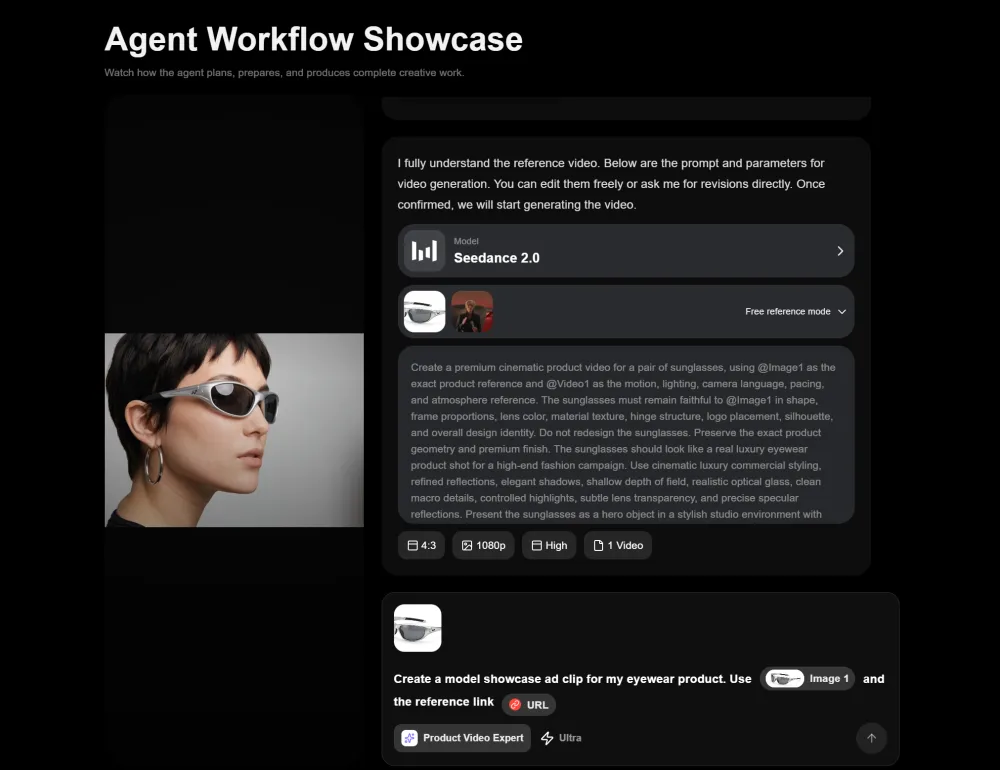
The fifth signal is upload support. iMini AI Agent supports images, PDFs, text, Markdown, Word, Excel, PowerPoint, and CSV files. That matters because real work rarely begins from a blank prompt. It begins with source material: a report, a spreadsheet, a draft, a brand file, a presentation, or a reference image.
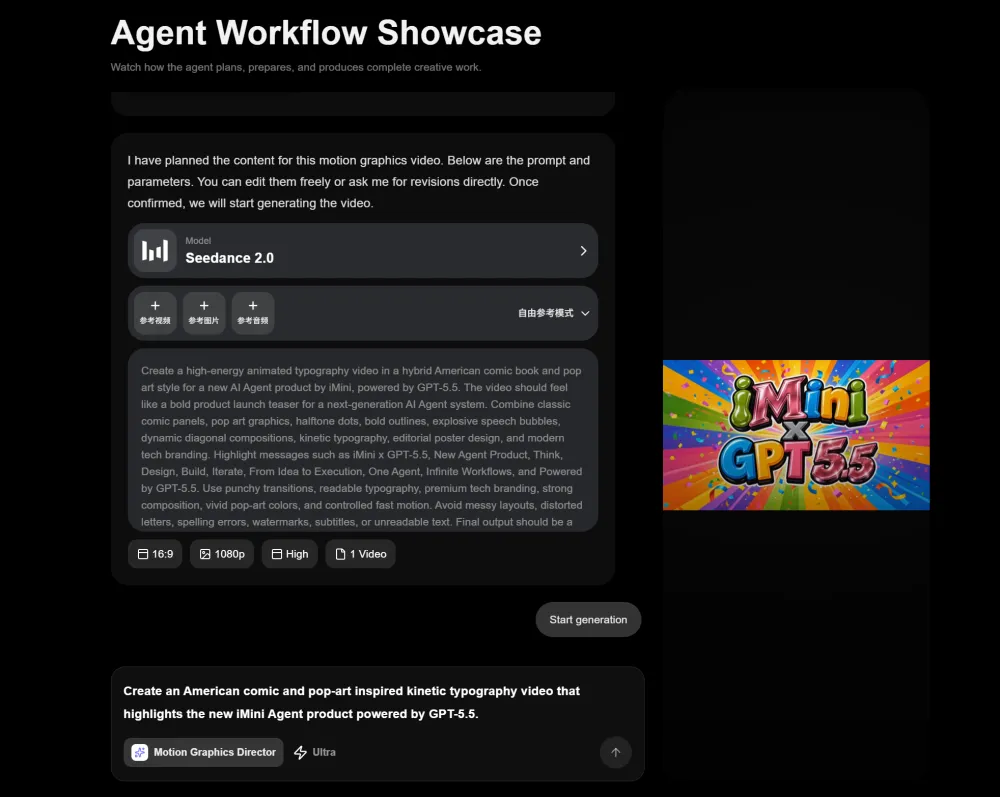
Put together, these pieces describe the product promise clearly: iMini AI Agent is designed to turn a loose idea into a task, connect that task with the right skill, generate usable materials, and keep the results as assets. That is exactly where the AI news cycle is heading.
Why Agents Matter for Creators and Teams
Creators do not need another place to type prompts. They need a system that can turn one idea into a usable chain: research angle, outline, copy, image prompt, visual direction, social post, short-video concept, and final campaign asset.
This is where agent products become commercially important. A good agent does not remove human taste. It removes repeated setup work. The user still chooses the angle, rejects weak outputs, and protects the brand; the agent carries the task across formats.
The Next Model Releases Will Feed the Agent Layer
The most important upcoming AI releases will likely fall into five categories: long-task reasoning, real-time voice, coding execution, multimodal generation, and lower-cost fast models. Each one matters because it strengthens a different part of the agent stack.
Long-task reasoning helps with planning. Voice makes the interface feel immediate. Coding agents automate implementation. Multimodal models connect documents, images, video, and design. Cheaper models make repeated revisions affordable. Together, they make agent workflows more practical.
How iMini Can Turn AI News Into a Product Story
For iMini, the strongest angle is not “we support new models.” It is “we turn model news into work people can publish.” The Agent experience already points in that direction through skills, inspiration entries, uploads, and an asset workspace.
A creator could start with a trending AI topic, ask iMini AI Agent for an article angle, turn that into social cards, generate a cover image, create a short-video outline, and save the assets for reuse. A marketer could upload a product brief and ask for a launch article, three ad concepts, a PPT outline, and a visual direction for the campaign.
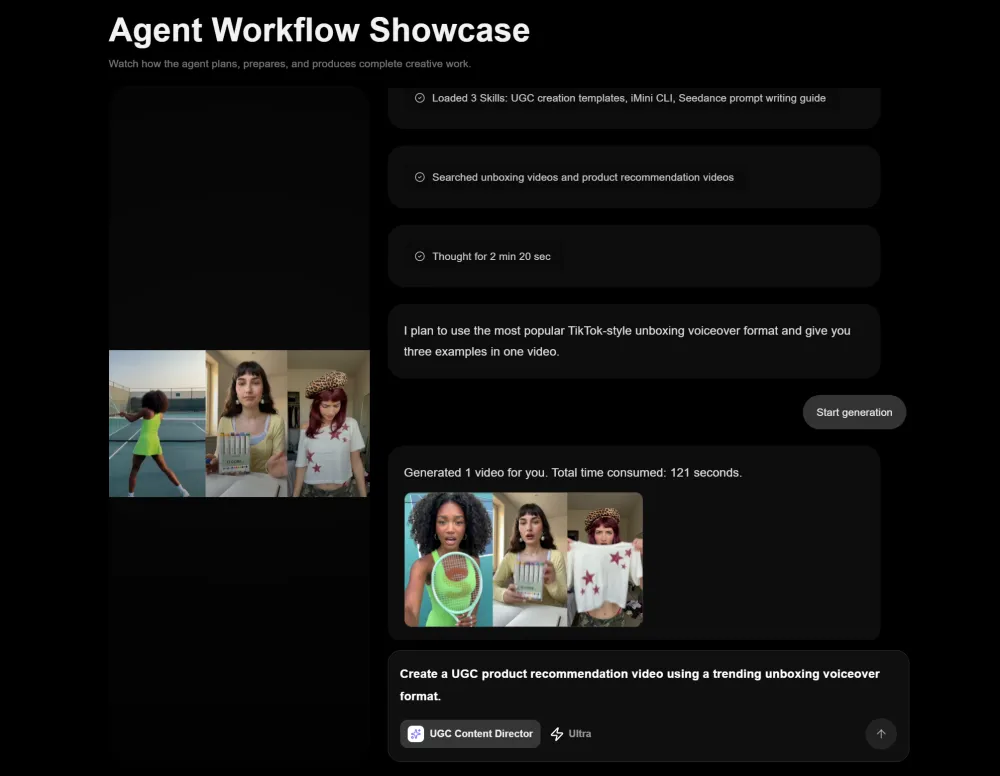
A team could use the same flow for localization. The English article becomes Chinese, Japanese, and Korean versions; the cover prompt becomes several culturally appropriate visual options; the asset library keeps each version organized. This is the difference between “AI helped me write something” and “AI helped me run the content operation.”
That is the product story: one trend becomes a finished content package. The model supplies capability, but the agent workflow supplies continuity, memory, and a place for the final work to live.
Conclusion
The AI news cycle will keep moving fast. There will always be new model rumors, benchmark debates, release predictions, and community speculation. But the deeper trend is easier to see: the market is moving from model watching to workflow building.
iMini AI Agent sits directly inside that shift. If the next generation of AI is judged by completed tasks rather than impressive demos, the winning products will be the ones that help users turn prediction, inspiration, and raw model capability into assets they can actually use.